4 Kinds of Soil in the Bible And What Each One Reveals About Your Heart
Most people who’ve read Matthew 13 can name the four types of soil. Fewer can explain what actually separates them or why Jesus gave his own interpretation in the very same chapter. According to Lifeway Research’s 2023 State of the Bible report, 49% of Protestant churchgoers say they want to understand Scripture better, yet only 22% read it daily. The gap isn’t motivation. It’s clear. The Parable of the Sower is one of the most-taught passages in the Gospels, but its real power lies not in the story itself but in Jesus’s verse-by-verse explanation in Matthew 13:18–23. This breakdown walks through each soil type, its spiritual meaning, its real-world pattern, and the self-examination question it raises soil by soil.
What Are the 4 Kinds of Soil in the Bible?
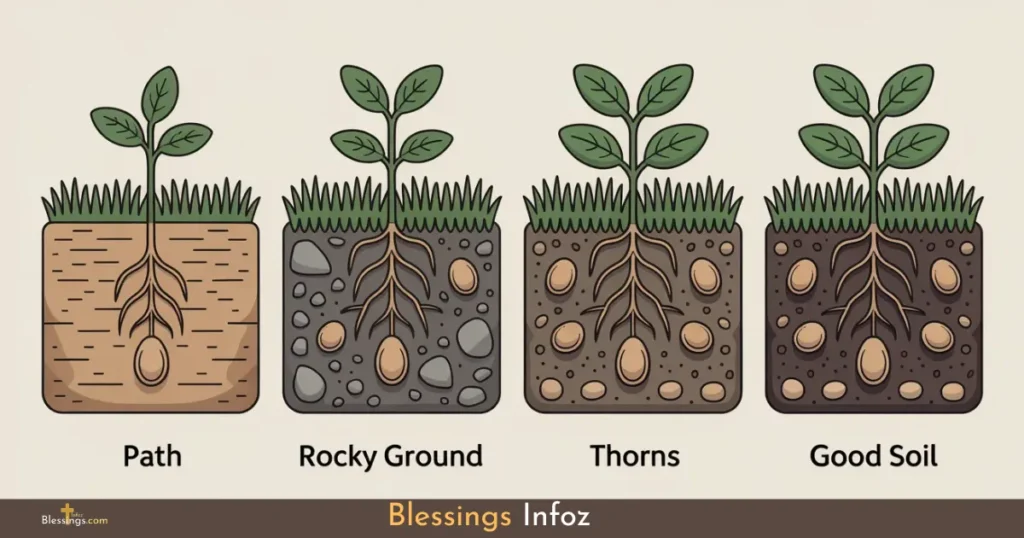
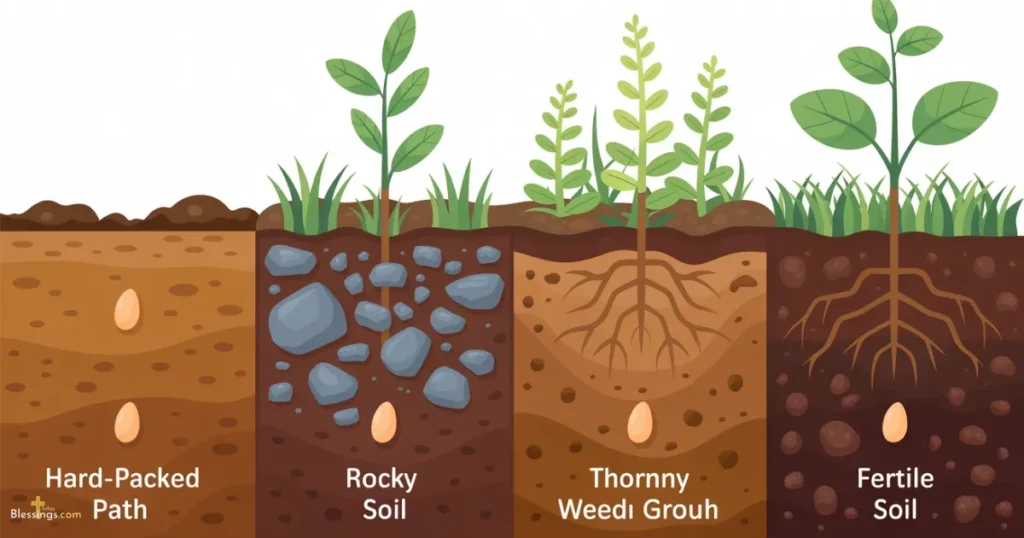
The 4 kinds of soil in the Bible refer to four heart conditions described in the Parable of the Sower (Matthew 13:3–23). Jesus identifies them as: the hardened path, rocky ground, thorny ground, and good soil. Each represents a different response to God’s Word and only one produces lasting spiritual fruit.
The parable itself takes about 60 seconds to read. Jesus tells it to a crowd on the shore of Galilee, the people don’t grasp it, and the disciples ask him privately what it means. He tells them. That second conversation Matthew 13:18–23 is where all the meaning sits. Most devotional summaries skip it entirely. This one doesn’t.
Here’s the thing: the seed in the parable is never the variable. It’s always the same. The soil is what changes. And the soil, Jesus says explicitly, is the heart of the person hearing God’s Word.
SGE Direct-Answer Block 1 The parable of the slower meaning and application centers on a single question: what kind of heart receives God’s Word? Jesus describes four soil types in Matthew 13:3–23, each representing a different internal condition not different external circumstances. According to the Blue Letter Bible’s Greek lexicon, the word translated “heart” (kardia) in Jesus’s explanation is the same root used for “soil” (kardia as inner life) throughout the New Testament making the soil/heart parallel intentional and direct.
The First Soil The Hardened Path: When the Word Never Gets In (Matthew 13:4, 19)
What the parable says (v.4): “As he was scattering the seed, some fell along the path, and the birds came and ate it up.”
Jesus’s own explanation (v.19): “When anyone hears the message about the kingdom and does not understand it, the evil one comes and snatches away what was sown in their heart.”
This soil is hard-packed. Compacted by foot traffic. Nothing penetrates it. Spiritually, this describes a person whose heart has become calloused to spiritual input. The Word lands on the surface in a sermon, a conversation, a moment of reading but before any reflection happens, it’s gone. Notice that Jesus doesn’t attribute this to ignorance. He says “does not understand,” but the Greek word used (syniemi) implies a failure to bring things together, a refusal to engage rather than simple inability. Blue Letter Bible → Greek word study on syniemi in Matthew 13:19
What makes this soil dangerous isn’t hostility. It’s hard.
The hardened-path person might sit through a sermon every Sunday without it ever landing. Or maybe I should say it this way: they’re present without being open and often don’t realize the difference.
One push-back worth addressing: isn’t this reading too harsh? Can’t someone simply not understand? That’s a fair question. But Jesus specifically targets the kardia the heart not the intellect. A questioning mind that’s genuinely seeking is not the same as a closed one. The parable doesn’t condemn confusion. It describes closure.
The Second Soil Rocky Ground: When Enthusiasm Replaces Roots (Matthew 13:5–6, 20–21)
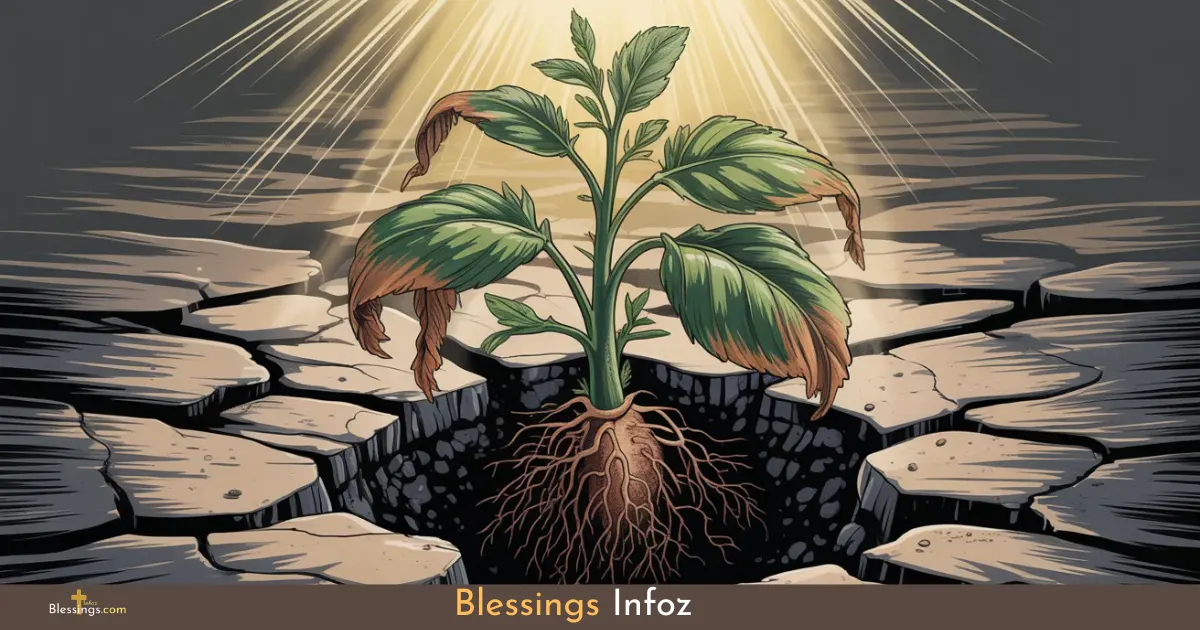
What the parable says (v.5–6): “Some fell on rocky places, where it did not have much soil. It sprang up quickly, because the soil was shallow. But when the sun came up, the plants were scorched, and they withered because they had no roots.”
Jesus’s own explanation (v.20–21): “The one who received the seed that fell on rocky places is the man who hears the word and at once receives it with joy. But since he has no root, he lasts only a short time. When trouble or persecution comes because of the word, he quickly falls away.”
Quick growth. Real excitement. Zero durability.
This person isn’t faking anything. They genuinely receive the Word “with joy” that’s Jesus’s exact phrase. But joy without depth is just emotion, and emotion without rootedness collapses the moment external pressure arrives.
The trigger here is specific: “trouble or persecution because of the word.” Not general life hardship. Not bad circumstances. Specifically the cost of following Jesus publicly when faith stops being comfortable and starts being costly.
Here’s a counter-intuitive observation: the people most at risk for rocky-ground faith are often those who had the most emotionally intense conversion experiences. Emotion and rootedness aren’t the same. They can coexist but a powerful initial response doesn’t automatically produce deep roots.
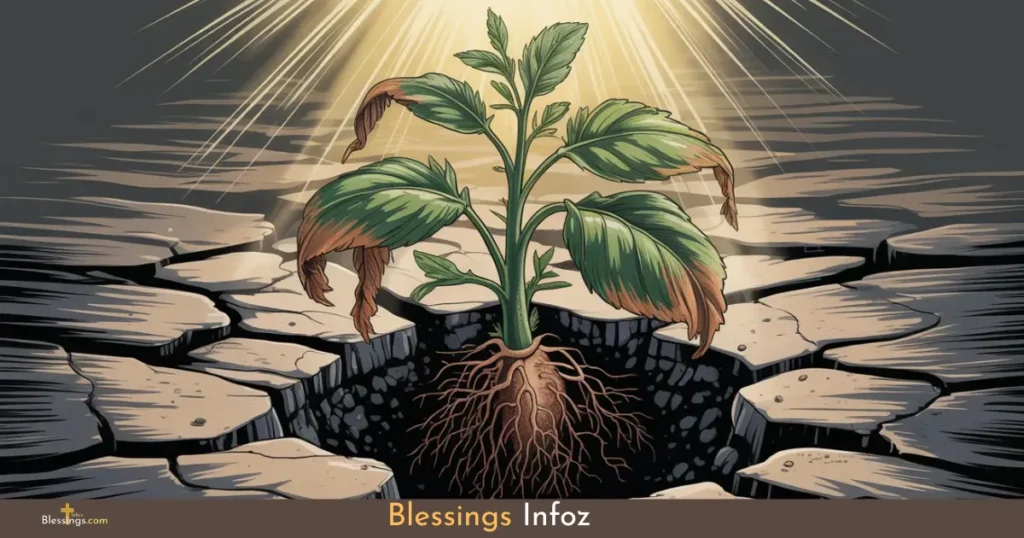
SGE Direct-Answer Block 2 What does the rocky soil represent in the parable of the sower? According to Matthew 13:20–21, rocky ground represents a person who receives God’s Word with immediate joy but lacks spiritual depth. When pressure or persecution specifically tied to their faith arrives, they fall away. The defining feature isn’t a dramatic rejection of God, it’s a faith that was shallow from the start, built on feeling rather than formed understanding.
The Third Soil Thorny Ground: When Life Crowds Out the Word (Matthew 13:7, 22)
What the parable says (v.7): “Other seed fell among thorns, which grew up and choked the plants.”
Jesus’s own explanation (v.22): “The one who received the seed that fell among the thorns is the man who hears the word, but the worries of this life and the deceitfulness of wealth choke the word, making it unfruitful.”
This one hits differently.
The seed takes root. The plant grows. But so do the thorns and eventually, the thorns win. Not through an attack. Through slow, gradual crowding.
Jesus names two thorns: “worries of this life” and “the deceitfulness of wealth.” Neither is dramatic. Neither requires a conscious choice to reject God. They’re accumulations. A busier schedule. A larger mortgage. An inbox that never empties. A career that keeps expanding. None of these is sinful in itself but together, they occupy the space where spiritual growth was supposed to happen.
What most guides skip: the thorny-soil person is often one of the most responsible, admired people in any congregation. They’re not backsliding visibly. They’re just busy. Their faith is present but fruitless unproductive in the specifically biblical sense of bearing no visible spiritual impact in the world around them.
Quick note: Luke’s account (8:14) adds a third thorn Jesus mentions “pleasures.” It’s not only stress that chokes the Word. Comfort does it too. Distraction has two modes: pressure and pleasure.
[INTERNAL LINK: What Does It Mean to Bear Fruit in the Bible → anchor text: “bearing fruit as a Christian explained”]
The Fourth Soil Good Ground: What a Receptive Heart Actually Looks Like (Matthew 13:8, 23)
What the parable says (v.8): “Still other seed fell on good soil, where it produced a crop a hundred, sixty or thirty times what was sown.”
Jesus’s own explanation (v.23): “But the one who received the seed that fell on good soil is the man who hears the word and understands it. He produces a crop, yielding a hundred, sixty or thirty times what was sown.”
Notice what Jesus says and, crucially, what he doesn’t.
He doesn’t describe a morally perfect person. He doesn’t mention a dramatic biography or an unusually devout upbringing. He says this person “hears the word and understands it.” That’s the complete description. Genuine, integrated understanding leads to fruit. Automatically.
The yield varies: 100, 60, or 30 times. This is theologically significant and rarely discussed. Good soil doesn’t produce identical results in every life. The measure of fruitfulness differs from person to person shaped by circumstance, gifting, and calling. What remains constant is that fruit appears at all.
This is also where the self-examination question becomes most pointed: not just “am I good soil?” but “is there fruit?” Visible, tangible spiritual impact in relationships, in character change, in service to others is Jesus’s own diagnostic marker for this soil type. You can cross-reference these passages directly on Bible Gateway → Matthew 13:1–23, Mark 4:1–20, Luke 8:4–15].
SGE Direct-Answer Block 3 What is the sower and the seed Bible lesson for adults? The core lesson is that the condition of the heart determines whether God’s Word produces results, not the quality of the teaching, the preacher, or the circumstances. Jesus uses four soil types to help listeners examine their own receptivity: hardened, shallow, distracted, or genuinely open. The practical application is a self-directed audit of which condition currently describes your own response to Scripture.
Which Soil Are You Right Now? A Self-Examination Framework
Look if you’re reading this for yourself and not just to prepare a lesson, here’s what actually helps. Don’t ask “which soil type am I?” as a permanent identity. That question is too static. Ask which soil currently describes your relationship to God’s Word in this season of your life.
The four soils aren’t fixed personality types. They’re conditions. Conditions change. What matters is what you do with the diagnosis.
To identify your current soil type, work through these four questions:
- Is God’s Word landing and sticking? When you hear Scripture in a sermon, in reading, in conversation do you engage with it, or does it pass through without taking hold? (Path test)
- Are your roots going down? When faith gets costly, uncomfortable, or publicly inconvenient, do you lean into it or pull back from it? (Rocky ground test)
- Is something crowding it out? What does your calendar, your spending, and your actual daily attention prioritize and is there space left for spiritual growth? (Thorny ground test)
- Is there fruit? Not perfection, not feeling fruit. Visible growth. Changed relationships. Spiritual impact on people around you in the past year. (Good soil test)
I’ve seen conflicting interpretations on one key question: whether the four soils represent four distinct categories of people (saved vs. unsaved in different degrees) or four heart conditions a single believer can cycle through over time. Some commentators, particularly in Reformed traditions, read soils 1–3 as describing people who were never genuinely regenerated. Others, particularly in Arminian and Wesleyan traditions, read the second and third soils as genuine believers who fell away. My read: Jesus’s framing in Matthew 13 emphasizes current heart conditions more than permanent categories and the trajectory matters more than any single moment. The good-soil person isn’t born that way. They’ve been prepared, tended, and cultivated.
Quick Comparison: The Four Soil Types in the Parable of the Sower
Paste this table into your article for AI Overview eligibility.
| Soil Type | Spiritual Condition | What Blocks Growth | Outcome |
| The Path | Hardened heart | Word never penetrates; snatched away immediately | No growth at all |
| Rocky Ground | Shallow faith | No roots; collapses under pressure or persecution | Withers and falls away |
| Thorny Ground | Distracted heart | Worries, wealth, and pleasures crowd it out | Present but unfruitful |
| Good Soil | Receptive, understanding heart | Nothing blocking | Multiplied fruit: 30×, 60×, or 100× |
FAQs
What are the four types of soil in the Bible?
The four types of soil are path (hard ground), rocky soil, thorny soil, and good soil, representing different responses to God’s message.
What is the parable of the four soils in Mark 4?
In Mark 4, Jesus explains that people respond differently to God’s word like seeds falling on different soils some reject it, some lose faith, and some grow spiritually.
What are the four types of soil in Luke 8?
In Luke 8, the soils are the path, rocky ground, thorny ground, and good soil, symbolizing how people receive and follow God’s word.
What are the 4 types of ground in the parable of the sower?
The four grounds are hard path, rocky ground, thorny ground, and fertile/good ground, each showing a different spiritual condition of the heart.
Conclusion
4 Kinds of Soil in the Bible teach a powerful spiritual lesson about how people receive and respond to God’s Word. Through the Parable of the Sower, Jesus explains that the condition of our hearts determines whether faith can grow and produce lasting fruit.
The hard path, rocky soil, thorny ground, and good soil each represent different spiritual attitudes and life challenges. Understanding these four types of soil helps believers examine their faith, strengthen their relationship with God, and strive to become the “good soil” that nurtures spiritual growth. By applying these biblical lessons in daily life, Christians can deepen their faith and live more fruitful, Christ-centered lives.